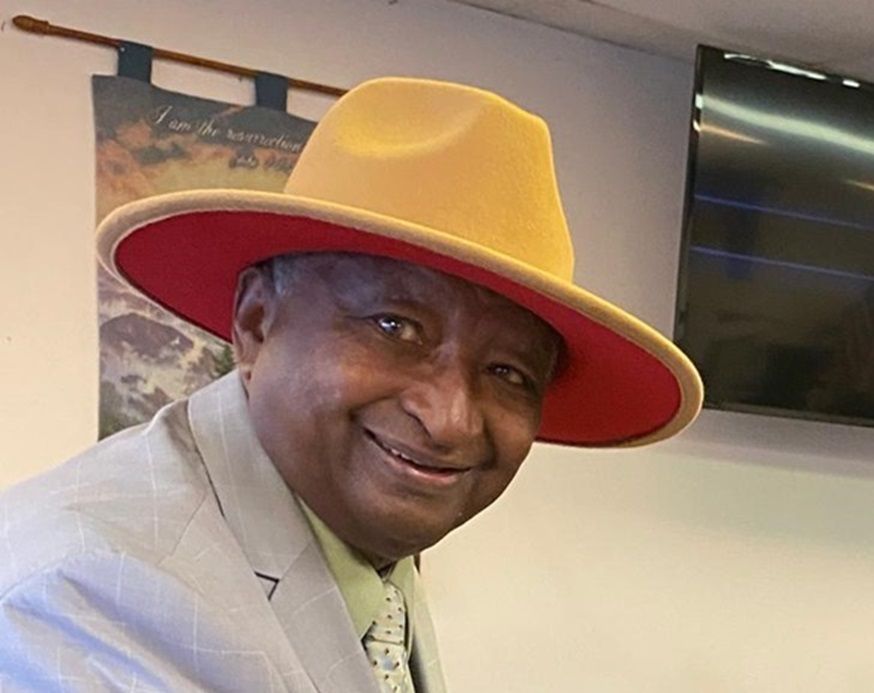
Frank Mutura graduated with an economics degree from the University of Nairobi, then known as University College Nairobi, a constituent college of the University of East Africa. For over 60 years, Frank contributed to the development of Kenya and the USA. In the next 5 years, to his 90th birthday, he will participate in the 60km Diaspora University Town (DUT) road development and spearhead the development of a 500-room DUT hotel. Frank is one of the founders of Diaspora University and Diaspora University Town, which comprises Diaspora Kenyans, the Ndara B Community, and partners.
Born in 1940 in Kiambaa, Kiambu region, Frank started his education at the present-day Kanunga High School, which in the 1940’s was a primary school offering grades 1 to 4 education. He proceeded to Riara School for grades 5 to 6, St. Peter Clavers in Nairobi for grades 7 and 8, and then to Mangu High School for grades 9 to 12. The late Prof. Raphael Njoroge, the founder of Diaspora University, was then at Mangu High School in his final year when Frank joined the School. From Mangu, Frank proceeded to Strathmore for his A-level education and then to the University of Nairobi.
After earning his degree in Economics, Frank worked in Shell Oil Company. He would later join the Uplands Bacon Factory and rise to become the Managing Director. During his tenure, the company was producing products for Kenya and for export to Asian countries. He still remembers the high reviews the Company's products received in Hong Kong.
He would move to the Kenya Meat Commission (KMC) in Athi River, where he became the Managing Commissioner. In this role, he would oversee the processing of meat, including beef, lamb, goat, and other products. The then-President Jomo Kenyatta liked his work and would from time to time talk to him. He still remembers the conversations and advice given.
When in KMC, he would also become Chairman of the Kenya Association of Manufacturers (KAM) and lead a delegation to a trade fair in New York City. The manufacturers would come back with orders for the high-quality products they were producing in Kenya.
Thereafter, he started a building materials company. He would supply construction materials to Jomo Kenyatta University of Agriculture and Technology (JKUAT). The university is along the Nairobi–Thika highway and has since grown to a 50,000-student university with 15 schools and centres. Frank is happy that the building materials he manufactured over 30 years ago continue to contribute to the education of thousands of students.
Frank, while visiting his children who had settled in the U.S., decided to also settle in the U.S. He joined the road construction sector of North Carolina, where, in the last 25 years, he has worked in the road construction and renewal of some of the 108,000 miles (over 160,000 km) of public roads in North Carolina State in the USA.
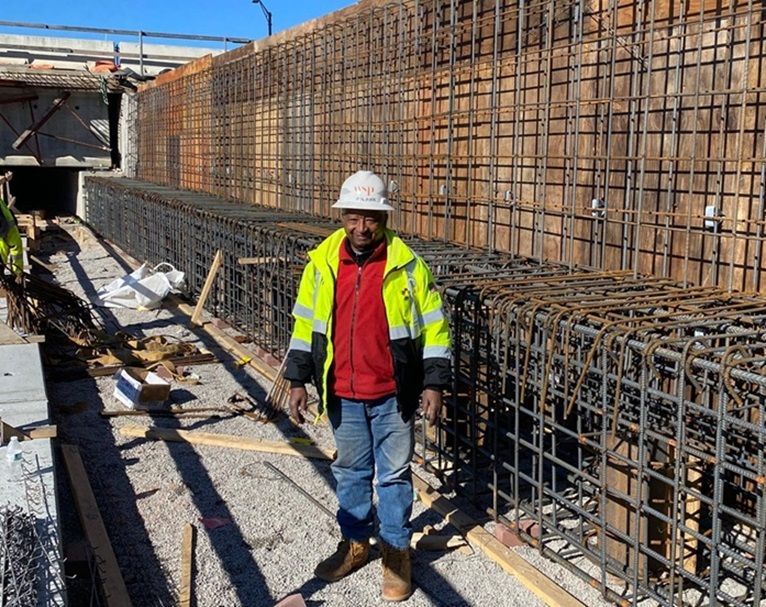
He has developed a plan to share the knowledge and expertise he has garnered to empower young Kenyans to build Kenya's roads. He will implement the plan at DUT and empower the next generation of Kenyans, especially Gen Z, to build roads in Kenya that meet Kenya's environmental standards and support travel, food, and product distribution.
Frank, while in the U.S., would learn about the Kenya University Project (KUP), started by Diaspora Kenyans in the Boston, MA region and led by Prof. Raphael Njoroge. In the early 1970s, Raphael, as headmaster of Mangu, moved Mangu High School to its current location along Nairobi – Thika Road. As an alumnus, Frank was proud of this achievement then. Many years later, upon learning that Prof. Njoroge wanted to establish a university in Kenya based on the WPI University where he was lecturing, Frank joined the professor and other Kenyans to found the university and town. He is today asking Mangu High School Alumni to participate in the founding of the Diaspora University.
His first founding role was to organize and fund a meeting in North Carolina. With others, he organized a successful meeting attended by about 80 Diaspora Kenyans living in Raleigh, NC. On a Monday evening, the late Prof. Njoroge and Dan Kamau would arrive in Raleigh, NC, after an 11-hour drive from Worcester, MA.
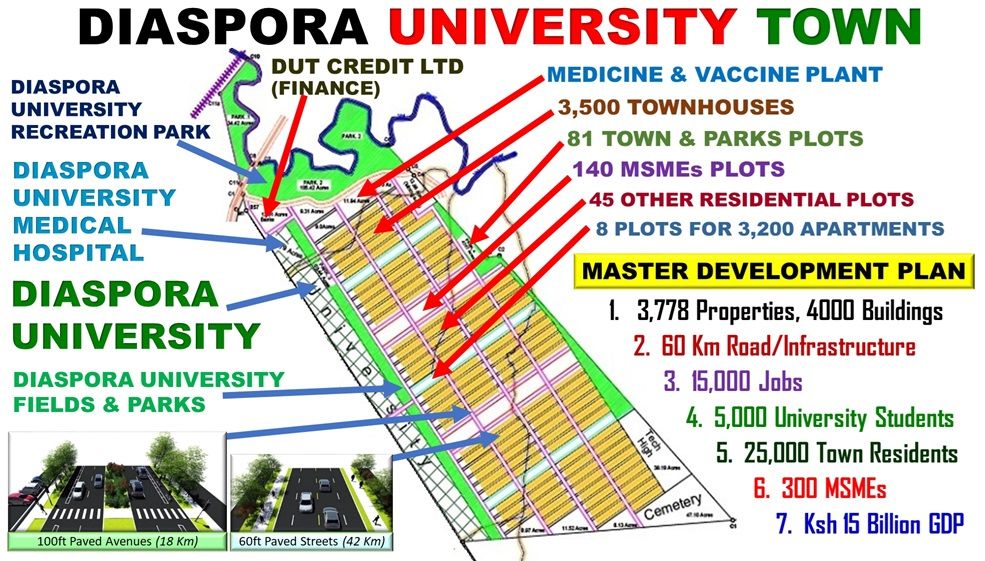
The main discussion in the meeting was on Diaspora Kenyans participating in the development of a 3,000-acre university and town, and creating jobs in Kenya. The role of Diaspora Kenyans was to become residential property developers and to open MSMEs in the town. Over 50% of the Diaspora Kenyans present that day responded, “Yes.” The journey of achieving Diaspora University Town had begun.
Dan would call Frank after the end of the 7-day, 4,500-mile (7,200 km) tour through 20 U.S. states that began in Worcester, MA, and included stops in Raleigh, NC; Atlanta, GA; Houston, TX; Dallas, TX; and Kansas City, KS. Frank was excited to hear that Diaspora Kenyans in different States were ready to develop towns and cities similar to those they lived in.
Having served as a Managing Director and worked in Kenya for 35 years before relocating to the U.S, Frank knew the effort needed to make progress. Frank was searching for land within the 2.36 million-acre Liakipia County land in the Nyahururu-Rimuruti region when Bishop Donald Mwawasi announced that, in accordance with the Constitution of Kenya, Article 185(4), the County Assembly of Taita Taveta County had approved the University Town development plan on 12th May 2015.

When the question of continuing to search for and acquire land in other regions was raised, Frank proposed that Diaspora Kenyans stop all efforts in other Counties and focus all efforts and resources on searching for and acquiring land in Taita Taveta County as the first project. He asked Bishop Mwawasi to return to Kenya to advance the land search and acquisition.
Bishop Mwawasi would visit Kenya in June 2015 to work on the land. On returning, having not achieved the land, Frank would again provide the leadership and ask Bishop Mwawasi to return to Kenya. The Bishop would travel to Kenya in August 2015, October 2015, January 2016, and May 2016.
During his fifth travel on 7th June 2016, he held a full-day meeting attended by over 80 members of the Ndara B Community and Government officials. During the meeting, the community offered their land so they could become founders of the university town. On 4th August 2016, Ndara B Community members, during a Members meeting, approved the offer and joined the founding of the university and town. The university would be named Diaspora.
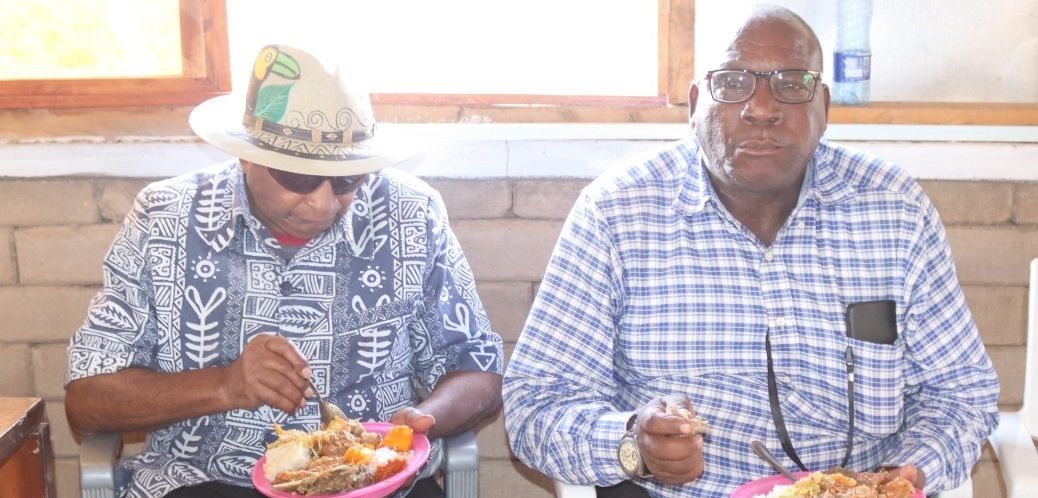
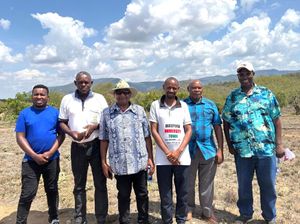
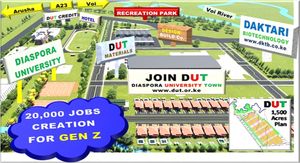
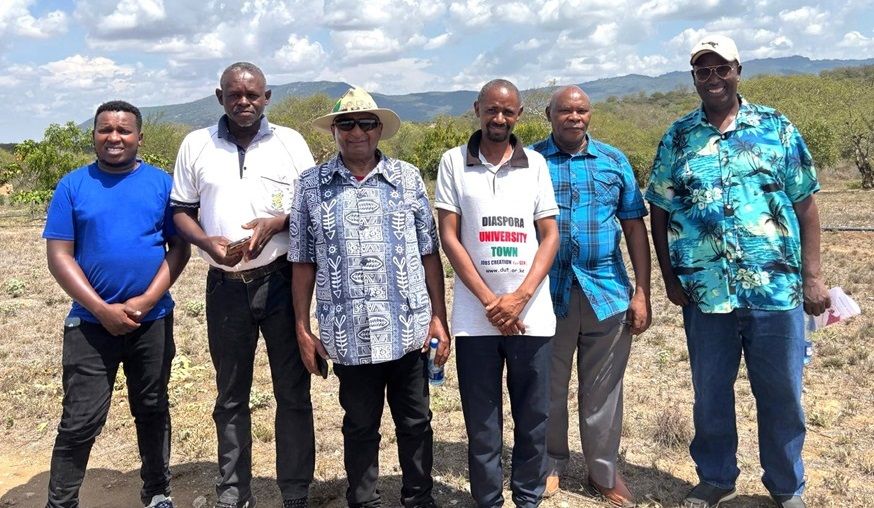
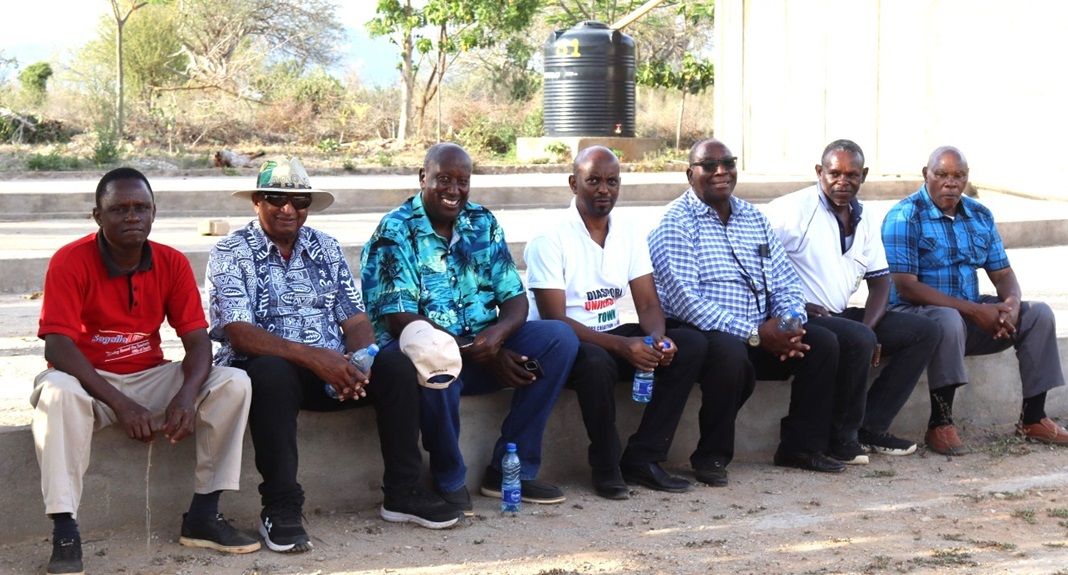
In December 2025, when visiting Diaspora University Town, Frank, now 85, was pleased with the progress made. He was happy to review the 1,500-acre plan with 3,778 plots and 60km of road infrastructure when stepping on the land. He was equally delighted to meet over 20 members of the Ndara B Community who are working in the Diaspora University Town.
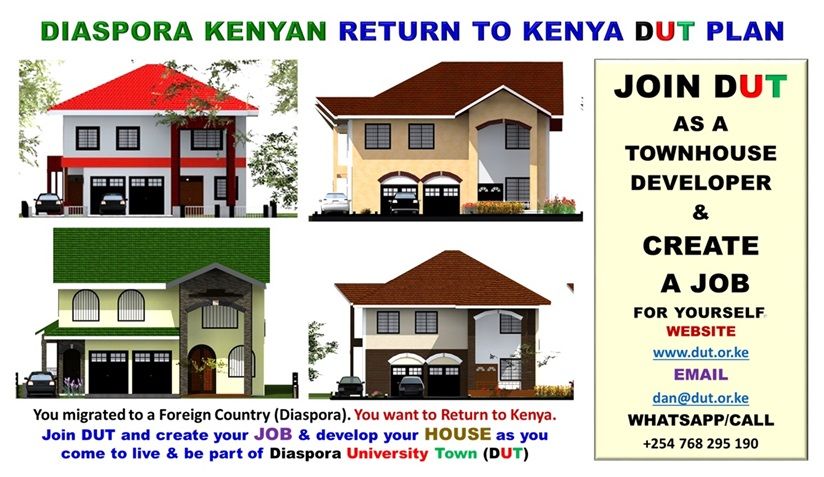
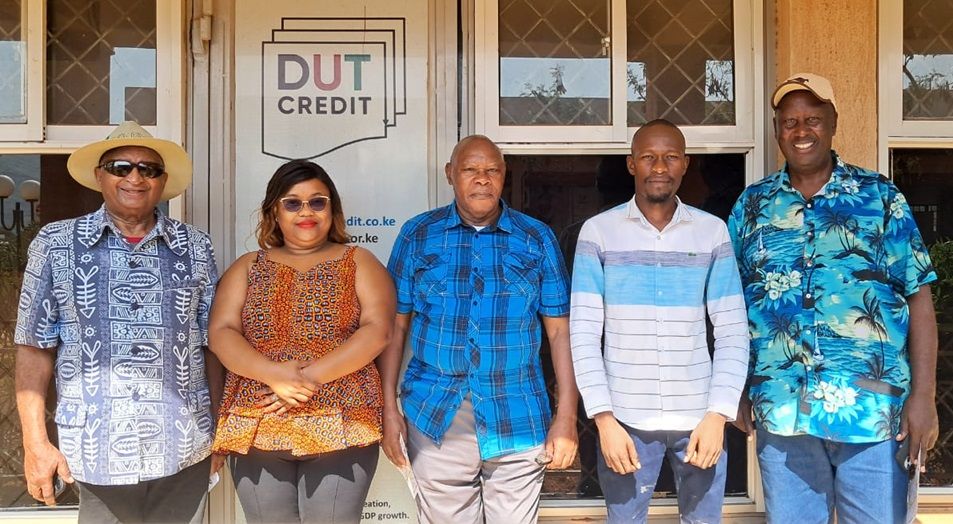
Frank, as an investor in DUT, has invested in developing DUT townhouses, in shares of DUT Credit Ltd, a financial institution, and in shares of Daktari Biotechnology Ltd, for the production and research of medicines and vaccines. During the DUT visit, he was accompanied by Sam Kabuki of the Los Angeles, CA region and Noah Wangai of Moreno Valley, CA, both of whom are also investors.
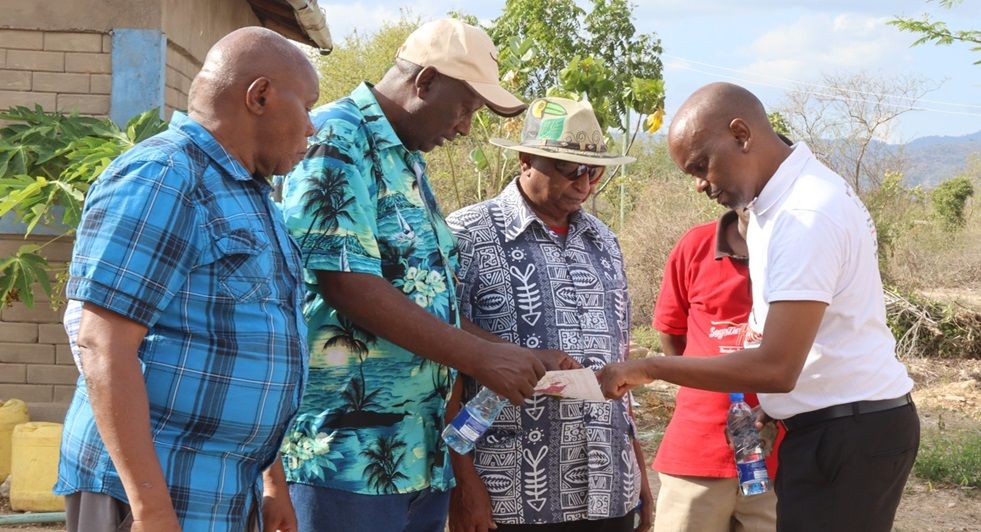
Dan Kamau, the DUT project director, formerly from Worcester, MA, and the visiting Diaspora Kenyans also resolved to spearhead a plan to achieve at least 1% of the over $5 billion being remitted by Diaspora Kenyans to Kenya to create jobs through the development of Universities, Hospitals, a Bank, and MSMEs. The Diaspora Kenyans' second goal is to bring about 2,000 Diaspora Kenyans back to Kenya and, in doing so, bring expertise to advance Kenya's development.
By the time Frank celebrates his 90th birthday in 2030, his founder's goal is to celebrate alongside students from the first class of 2030, who by then will have graduated after completing the 4-year degree program. He is today committed to the DUT's founding and plans to work about 200 hours a year, totaling 1,000 hours over the next 5 years.